
Rhode Island’s economy grew in the first quarter, but it trails the region and nation in its recovery from the coronavirus pandemic, according to a report published Tuesday by the Center for Global and Regional Economic Studies at Bryant University and the Rhode Island Public Expenditure Council.
Rhode Island’s gross domestic product is projected to have grown by 3.5% in the first quarter, but that trails New England, with projected growth of 5.2%, and the nation at 6.4%, the Rhode Island Current Economic Indicator Briefing reports.
Rhode Island’s “growth gap” existed before the coronavirus pandemic but only widened over the past year, the report says.
Rhode Island regained some jobs but hasn’t made up for losses suffered at the start of the pandemic, according to the report.
In the first quarter, unemployment decreased from 7.7% in the last quarter of 2020 to 7.2% in the first quarter of this year. The total number of jobs increased by 0.8 percent, from an average of 461,000 jobs to 464,900 jobs, the report says.
“Economic activity in leisure and hospitality is still severely constrained by the pandemic and job growth continues to be slow in this industry,” the report says.
Employment in leisure and hospitality increased 2.4% in the first quarter, the report says.
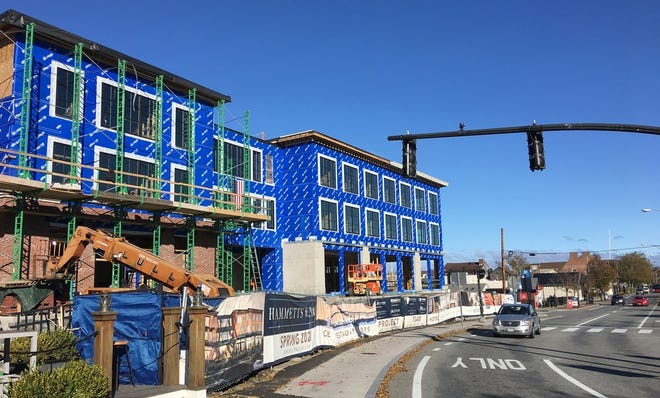
On the other hand, construction “has been particularly resilient to the pandemic.” Current employment surpasses pre-pandemic levels, the report says.
Employment in construction increased 2.9% in the first quarter after growing 3.5% in the fourth quarter of 2020 and 8.7% in the third quarter, the report says.
General sales and gross receipt taxes increased by 8.9% in the first quarter, according to the report.
“We’ve come a long way from our economic freefall last spring,” RIPEC President and CEO Michael DiBiase said in a press release, “but the Briefing reveals stubborn structural weaknesses that are slowing our recovery and make the Ocean State more vulnerable in the future.”
“Policymakers should take note of weaknesses in the state’s industry mix and consider what policies may best spur economic development in high growth industries,” he said.
(401) 277-7614
On Twitter: @jgregoryperry


