
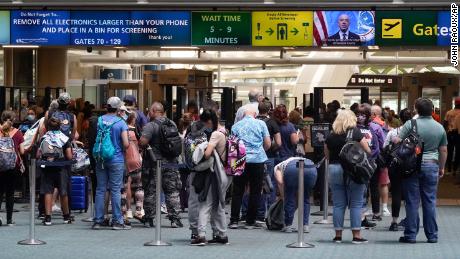
The data confirms the recent upward air travel trend to levels not seen since before the pandemic: On June 11, 2019, the TSA screened 2.7 million people.
Before the pandemic, the TSA screened on average between 2 and 2.5 million travelers per day.
“Historically, July and August have been the busiest months of the year at the park,” Grand Teton said in a press release Friday.
Vaccines recommended despite rare heart inflammation risk
More than 143 million Americans — 43.1% of the total population — are fully vaccinated, and 52.2% have had one dose of a Covid-19 vaccine, according to CDC data. More than 64% of adults have received at least one dose and nearly 54% are fully vaccinated. The Biden administration aims to vaccinate 70% of adults with at least one dose by July 4.
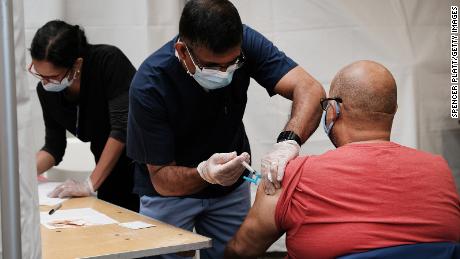
The CDC has scheduled an emergency meeting of its vaccine advisers for next week to discuss a possible link between the vaccines and inflammatory conditions known as myocarditis and pericarditis, mostly among younger men.
It noted the reports of cases were very rare, and 81% of the 270 patients under 30 with suspected myocarditis related to vaccination have had a full recovery.
“We remain confident that the benefits of vaccination far exceed the very unusual risks. The risks of Covid-19 infection include its potentially fatal consequences and the potential long-term health effects that are still revealing themselves, including lingering consequences affecting the heart, brain, vascular system and other organs after infection,” the association said.
AAP issues new guidelines for kids in sports
Many kids’ sports are getting back to full speed in the summer months, and the American Academy of Pediatrics has issued updated guidelines for children returning to sports and other activities.
Unvaccinated athletes should wear a mask for all indoor activity except situations in which a mask may pose a hazard. For outdoor activities, AAP recommends that unvaccinated athletes wear a mask while on the sidelines and in all activities involving sustained contact of 3 feet or less.
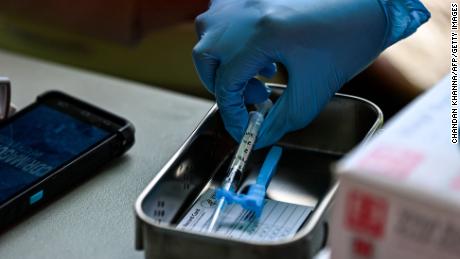
Several advisers were cautious about the idea of extending vaccine authorization to children and mentioned that the virus has caused serious disease in children as often as it has among adults.
“I just want to reiterate something here — this is an illness that takes the lives of children. We know that over 300 children have died in the pandemic so far,” Dr. Peter Marks, director of FDA’s Center for Biologics Evaluation and Research, said Thursday.
“All of us have the goal to eliminate any vaccine-preventable deaths that we can with a reasonable benefit-risk.”
Schools were open in April yet hesitancy may remain, data shows
For fourth-grade, 97% of schools were open or offering any form of in-person learning for the month of April, an increase of nine percentage points from March. Sixty percent of schools offered full time in-person classes, but only 51% of fourth-graders attended in-person full time, 23% attended hybrid, and 26% were remote only, according to DOE data. These trends have been on a steady rise since the DOE started tracking in January.

For eighth-grade, 93% of schools were open for full in-person or hybrid learning, with 57% of schools giving students a full five-day a week option. Just 41% of eighth-graders attended school full-time in April, 26% attended hybrid, and 33% are still fully remote.
“Greater numbers of school buildings continue to open their doors to welcome back students in-person,” said Mark Schneider, director of IES, the research, statistics, and evaluation arm of the Department of Education. “We should celebrate the substantial progress on a return to normalcy while also redoubling our efforts to ensure that the most high-need students, students who have already borne the brunt of the coronavirus and its effects, don’t get left behind.”
There is some disproportionality along racial demographics with returns to in-person learning, according to DOE data, as a higher percentage of White students were attending school full-time when compared to Black, Hispanic and Asian students.
CNN’s Pete Muntean, Maggie Fox, Andy Rose, Danielle Sills, Sarah Braner and Elizabeth Stuart contributed to this report.


